Baltimore has Found the Key to Urban Violence
A knock at the door. Two cops, your pastor, and a social worker with a message: stop the gun violence. This is exactly how one of America's most violent cities reduced homicides by 60%.
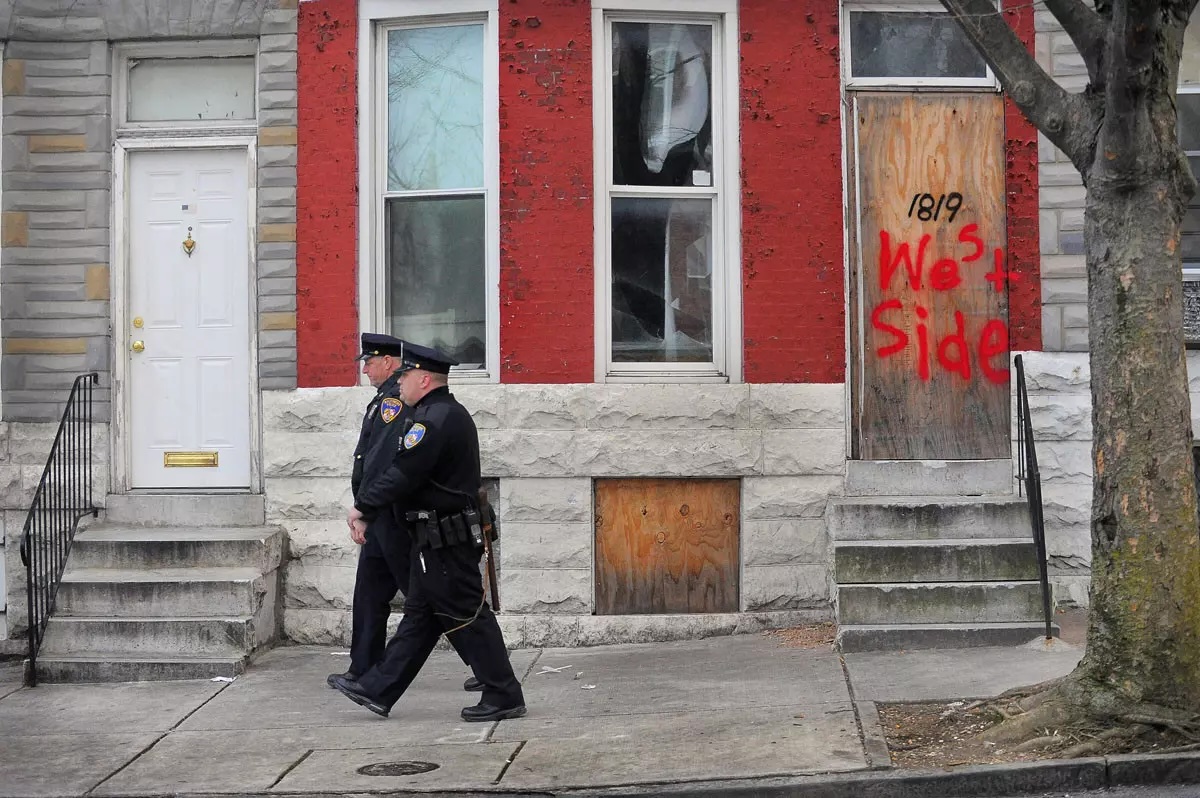
Imagine you are a gangmember in West Baltimore. You were involved in a shootout a few days ago, no deaths but your a little shaken up. You wake up to a knock at your door. Two cops, a social worker and your pastor are standing at your door with a message. The City of Baltimore knows who you are and knows about your criminal past. If you stop causing violence in your community, the city will help you find permanent employment.
Baltimore calls this focused deterrence, and it has had a shocking impact on shootings in one of America's most violent cities.
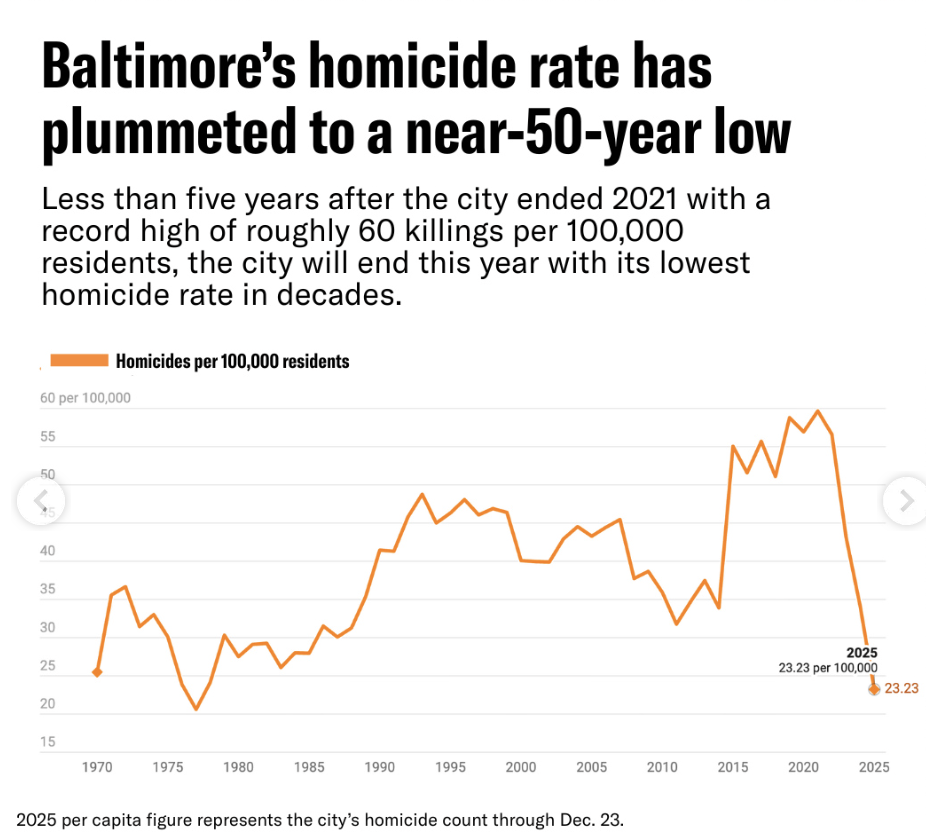
For nearly six decades, Baltimore suffered from one of the highest homicide rates in the country. In 2021, the city recorded 58 homicides per 100,000 residents, the second highest among large US cities. Starting in 2022, Baltimore rolled out a new Comprehensive Violence Prevention Plan, and between 2022 and 2025 citywide homicides declined by 60%. Baltimore's plan demonstrated how a city struggling with resources, poverty and incarceration could change the narrative.
Nowhere was the violence more concentrated than Baltimore's Western District, made notorious by HBO's The Wire. The Western was a perfect storm of challenges facing US cities. In 2022, a third of residents in the Western District lived below the poverty line, and over a third of housing units in the district sat vacant and visibly deteriorating.
Then, Baltimore launched its Comprehensive Violence Prevention Plan in 2022, beginning with pilot programs in the Western District, and the city began to transform. The plan had three key pillars: focused deterrence at the individual level, improving the built environment, and reducing recidivism through re-entry programs.
In the Western District, shootings and homicides dropped by 30% and carjackings dropped by 40%, just within the first 18 months. Notably, this violence did not just migrate elsewhere, as is often the case when pilot programs crack down on crime in specific neighborhoods. An analysis by the University of Pennsylvania found no evidence of spillover violence into surrounding neighborhoods. In fact, declines in homicide also spurred drops in other violent crime citywide.
Focused Deterrence
The centerpiece of Baltimore's plan is its Group Violence Reduction Strategy (GVRS). This model, borrowed from the Boston Gun Project of the 1990s, targets the handful of offenders having an outsized impact on crime in the community.
The logic behind the program is the idea that gun violence is highly social. In Baltimore, as is true of many high crime neighborhoods, most homicides stem from interpersonal disputes involving members of a group engaged in drug trafficking, robbery, or other organized crime. In the Western, roughly 2% of all residents were involved in some form of criminal organization, and within that population, some individuals had a higher multiplier effect than others.
In practice, the GVRS runs through weekly community meetings and coordinated outreach to the individuals it identifies. Police officers in the precinct led weekly meetings with officers, community-based organizations, nonprofits operating in the neighborhood and local prosecutors, to identify the people at highest risk of being involved in a shooting — the target individuals. These meetings, often held at local churches identify both perpetrators and victims of shootings. As many victims of past shootings end up being involved again, sometimes as the perpetrator.
A small team including a detective, an outreach worker and a credible community messenger, often someone with experience in organized crime or formerly incarcerated from the neighborhood, visits these target individuals directly. They tell the individual first, that they have been identified by the city as being at high risk of being involved in a future shooting, and second, that engaging in violence will bring law enforcement and prosecutorial attention onto them. Then the credible messenger expresses disapproval of violence and notes what violence has done to the neighborhood, and the outreach worker offers support from partner organizations that may offer help with housing or job placement.
The credibility of these messengers is essential. The city looks for individuals who are from the area and are respected by the people they are targeting. For those who turn down support and engage in crime, they are met with an increased police presence, arrest, and prosecution.
Given limited resources, police have shifted from mass arrests to increasing their presence in a targeted way. Police focus on patrolling housing developments with high numbers of target individuals, and spend time building criminal cases against them.
The strategy depends on target individuals understanding a clear cause and effect. Their actions bring increased scrutiny, and that scrutiny comes with the threat of prosecution, but there are other options should they choose to take help.
The University of Pennsylvania also considered whether the GVRS would decrease the likelihood a shooting would be reported in the first place, since friends and neighbors may be more scared of putting someone on the police's radar. The study found no decline in likelihood of reporting a shooting.
The GVRS weekly meetings were also supported by a gun violence data portal. The portal lets the Baltimore Police Department trace which weapons were involved in shootings and where they were sourced. This database establishes trafficking pipelines, which pipelines are fueling the violence, and the origins of recovered crime guns, to further identify target individuals.
Why now?
The GVRS model has been tried before to no avail. In 1998, Baltimore tried a focused-deterrence effort, but the police department was resistant to change and the program faced political infighting. Another attempt was made starting in 2014, but in the wake of Freddie Gray's death in 2015 the department's priorities changed and the pilot collapsed. Finally in 2022, after rising violence during the pandemic, the city was ready to go all in on a creative solution.
In 2022, the program was re-launched with coordinated support from the police department and community organizations, and wraparound programs that could be piloted, expanded and attack the drivers of violence from several angles.
In addition to going after the individuals responsible for gun violence, Baltimore took on its decaying built environment and post-incarceration re-entry.
Wraparound Support Programs
The Mayor's Office, in conjunction with the BPD, created detailed Neighborhood Policing Programs at the block level. A core element of these neighborhood plans was reforming the built environment. Funded through the American Rescue Plan, the city improved street lighting, cleared trash, remediated vacant and decaying properties, and created new communal green space. Neighborhoods that look nice have more foot traffic. Improving the built environment created more visibility on the block and decreased the opportunity for crime.
The third pillar of the program sought to reduce recidivism through better re-entry planning. Typically, citizens returning to their communities after incarceration are given $2 for a bus ticket and nothing else. They are not permitted to call family for a pick-up in advance, and they are not able to set up a job, a place to live, or any plan for how they will rebuild after incarceration.
Baltimore's Safe Return Program gives incarcerated individuals a pathway back to life after prison. Program staff go "behind the wall," meaning into the prison, monthly to coordinate individualized re-entry plans for people in the months leading up to their release. The plans include a family support assessment, mental-health support, life-skills coaching, group and individual therapy, and plans for housing and employment. These plans and introductions to service providers make the return to society smooth and supported. Rather than feeling alone, these returning citizens have a roadmap to a sustainable and crime-free life.
This program began in 2024, but the Mayor's Office is still struggling to continue funding it.
Lessons for Other Cities
That knock on the door comes with a threat, but it also comes with a host of wraparound services that offer alternatives to employment within a gang. The credibility of support sources and the credibility of police enforcement are what give that knock power
Baltimore's turnaround came from aligning police enforcement, neighborhood investment and individualized support services in a very specific, targeted manner. Each program relies on both police and neighborhood input. These programs started at the block or neighborhood level and expanded slowly. Baltimore did not reduce violence by broad arrests and sweeps; rather it took its limited resources and targeted three pillars: individuals driving gun violence, environmentally-created opportunities for violence, and the chaos of re-entry. Each of these pillars has a multiplier effect on violence, so each dollar spent made a meaningful difference.
Baltimore offers insight into how to design a program that works to decrease crime and improve citizens' lives in the face of a million other systemic and structural challenges.
More from The Effective

Delaware district swaps armed police for district-employed constables in middle schools
Facing board pushback over school arrests, Christina School District will phase school resource officers out of middle schools and replace them with constables it employs directly.
California's camera network spotted more than half of 2025's wildfires before anyone called 911
Nine years into a state-university partnership, the reporting says AI-assisted cameras informed the response to about 3,600 incidents last year, though no false-alarm or response-time figures are given.

Detroit's own gunshot-detection numbers show alerts rarely end in evidence or arrests
As police sought a $2.06 million contract extension, department data cited in the reporting shows shell casings recovered in about 12 percent of ShotSpotter alerts and a lower arrest-clearance rate than for gunfire reported by other means.