How this Obscure 19th Century Feud Set the Rules of the Data Center Game Today
When it comes to data centers, this 19th century debate is having a lasting impact in town halls and for county commissions across the country.
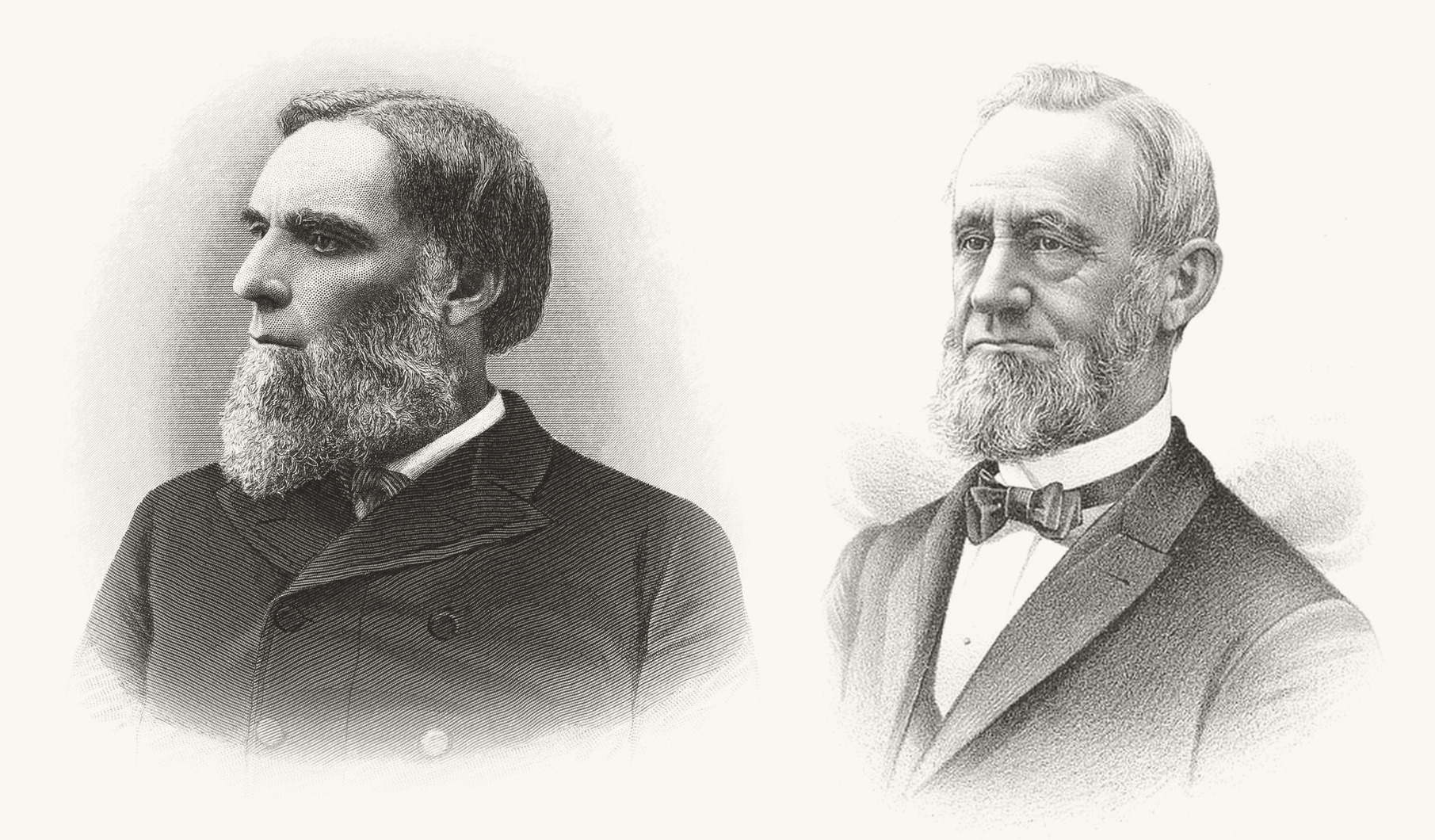
John Dillon and Thomas Cooley may never have fought in real life, but their intellectual debates defined America's understanding of state constitutions and local rights. For the states that sided with Dillon, regulating data centers is posing a serious challenge.
For state constitutional conventions in the 19th century, the question of municipal power loomed large.
In the late nineteenth century, the US was in the midst of the Reconstruction Era, and states across the country were drafting and redrafting their state constitutions. These drafters had to wrestle with an important question: how much power should local municipalities have relative to their states? The US had just fought a war over the question of state power relative to the federal government, and the same question was bubbling up at the local level.
There were two competing views, Dillon's Rule and the Cooley Doctrine, the latter often known as home rule. John Forrest Dillon, a justice on the Iowa Supreme Court, and eventually a judge on the Eighth Circuit, believed that municipalities "owe their origin to, and derive their powers and rights wholly from, the legislature." City of Clinton, 24 Iowa at 475. Dillon went so far as to say that the legislature "breathes into them the breath of life without which they cannot exist. As it creates, so it may destroy." Id. Essentially, Dillon believed that local governments owed their entire existence to the states in which they sat, and as such, states should have plenary control.
Thomas Cooley took a different approach. Dillon's perspective may have made sense in Iowa, where the state's founding predated formal city governments, but further east history ran the other way. The states of Massachusetts and Pennsylvania were organized after their dominant cities, Boston and Philadelphia, already had robust local governments. To Cooley, Dillon's Rule took away an inherent right to self-determination. Cooley, who sat on the Michigan Supreme Court, wrote that "[l]ocal government is a matter of absolute right; and the state cannot take it away." Hurlbut, 24 Mich. at 108.
Dillon's Rule was already ascending when the Supreme Court of the United States weighed in on the fight in Hunter v. City of Pittsburgh in 1907. SCOTUS clearly took Dillon's side, cementing Dillon's Rule as the dominant governing framework for state and local relations.
Neither Thomas Cooley nor John Dillon would have anticipated the data center boom today, but picking Dillon's Rule is having a major impact on how counties can manage development in the 21st century.
Today, 39 states have some form of Dillon's Rule. In these states, on most issues, municipal governments only have the powers expressly granted to them by their state's legislature. Most state legislatures have granted zoning authority or development regulatory authority to cities and towns, but many states have not extended this power to counties. Since states that adopted Dillon's Rule give no inherent power to smaller units of government, these counties are powerless until their state legislature acts. State legislatures are slow moving in comparison to County Commissions which represent fewer people, across a smaller region, with more common interests. As a result, local governments under Dillon's Rule cannot adapt as quickly to new challenges.
In contrast, states that have adopted Cooley's Doctrine grant inherent authority to self-govern. Unless the state has expressly said a county cannot regulate development, counties in those states can impose regulation right away.
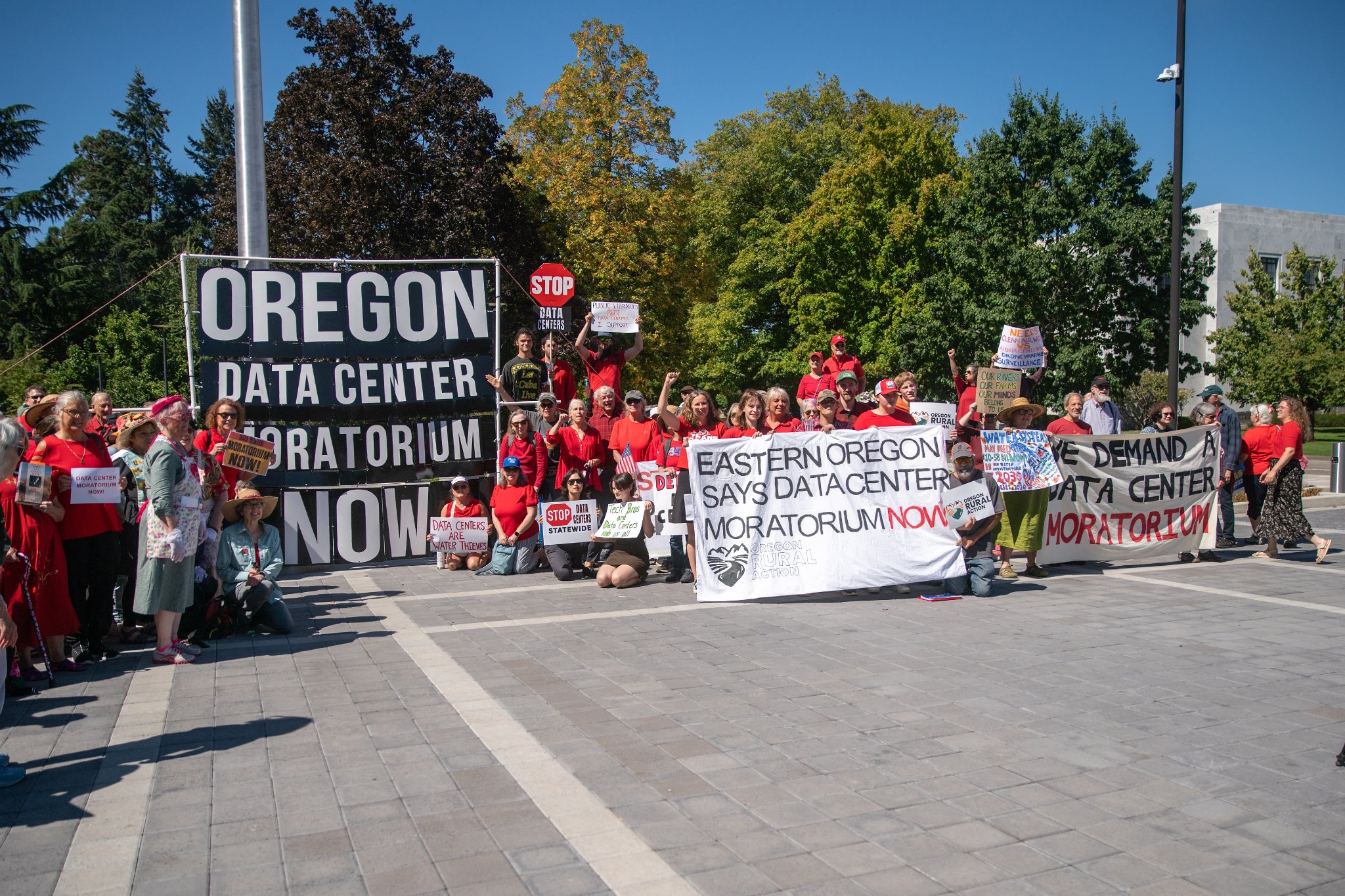
This intellectual debate is not just a theoretical exercise; it is causing real problems for some counties trying to rein in data center development.
Beacon Data Centers is planning a $6 billion data center on 95 acres in North Mobile County, Alabama. Residents brought over 360 signatures to the County Commission requesting a moratorium on new data center development. In response, the Commission said, sorry nothing we can do, and they are right. In Alabama, cities have been granted the right to enact comprehensive zoning policies, but this right has not been extended to counties.
In many Dillon's Rule states, including Alabama, state legislatures have granted cities and towns certain self-governance rights, including the right to enact zoning schemes. But less populous county areas, or unincorporated land are often left out of these grants. This gap creates particularly challenging conditions for dealing with data centers, since they are often built in more rural areas outside of town boundaries. Since Mobile County does not fall within a town given zoning power, its county commission has its hands tied.
For all people requesting a moratorium, there are also residents in favor of the investment. The fight over data centers has arguments on both sides. There are real concerns around sustainability and energy use, and there are equally real benefits in terms of job growth and investments in new technologies. But Mobile County cannot have that fight on the merits until the state of Alabama grants it the right to regulate development of its own land.
In contrast, Oregon has a strong home-rule (Cooley) tradition. In Oregon, municipalities start with plenary legal authority. The Oregon legislature has placed some limits on development authority, requiring that all local governments adopt comprehensive zoning plans that conform to the nineteen planning goals enumerated by the state. This applies to cities, towns and counties equally. The legislature has acted to ensure some conformity across regions, but did not need to specify who gets the power. Washington County voted against a county-level moratorium on all new data center development, but the City of Hillsboro enacted a temporary ban within its city limits. The county and the city both have the right to legislate within their walls. The county has different priorities than the city, and as a result they came to different conclusions regarding a moratorium. What matters is not what decision the city made versus the county. What matters is their ability to make the decision at all.
Data centers continue to be a hot-button issue in small towns and counties across America. Without ever knowing their names, residents who petition their local governments for action against data centers are reigniting the Dillon-Cooley fight, one signature at a time.
More from The Effective
Pittsburgh cuts routine permit waits from a week to one day
A first phase of permitting reforms — virtual inspections, an online tracker, and an 'EZ Permits' fast lane — targets low-risk residential and commercial work.

AI screening of permit applications cut Honolulu's median housing permit wait by about 40 percent
Cities are putting automated completeness checks in front of human plan reviewers, and the reporting finds real time savings in Honolulu alongside a pilot Seattle judged not ready to adopt.

Early state pilots suggest agentic AI can speed up permits and prescriptions
A new playbook catalogs early agentic-AI experiments in Virginia, Utah, and Boston, including one pilot state officials say found $1.4 billion in annual savings and cut permit times by nearly 80%.